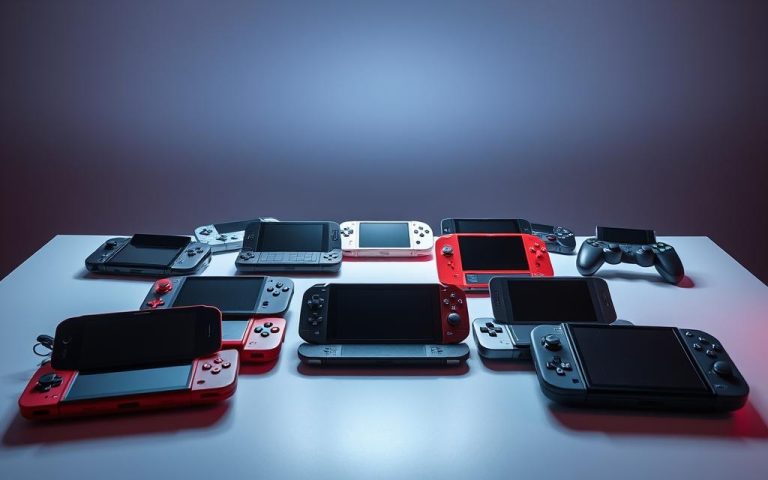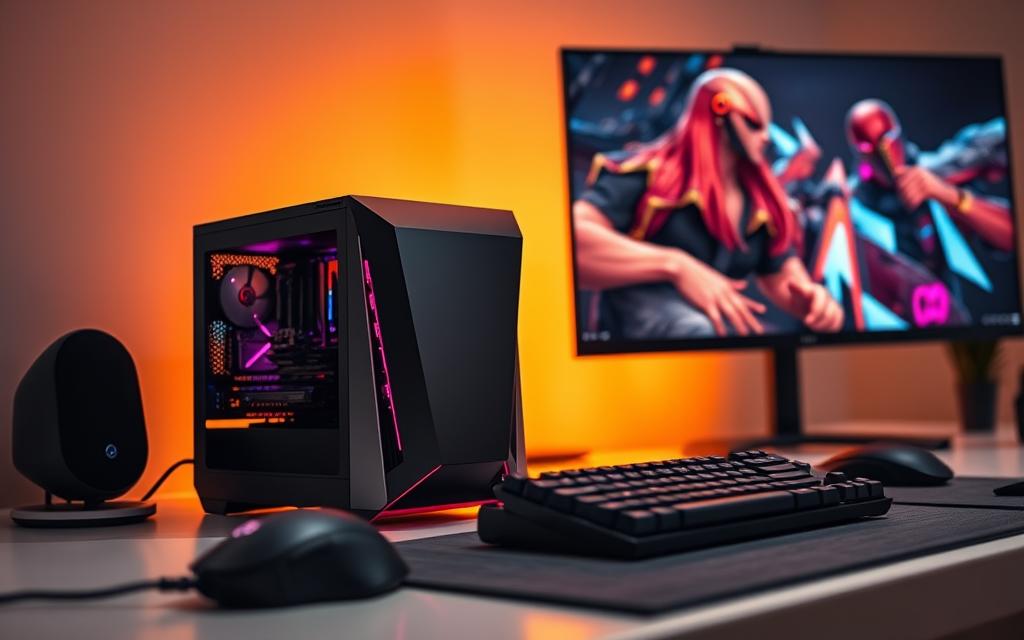
The Rise of the Gamer PC Mini Compact Powerhouses
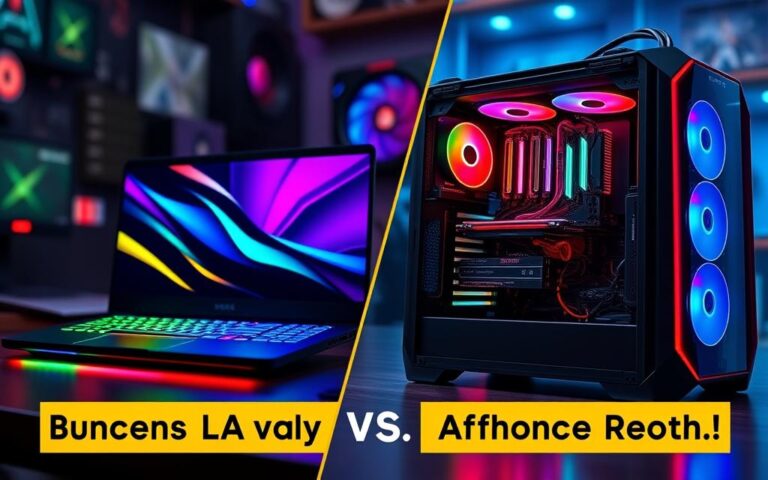
Gaming technology has changed a lot in recent years. The big towers that used to be the norm are now facing new competition.
These small gaming computers are changing how we think about gaming. They have a lot of power in a tiny package. This is shaking up what we thought we knew about gaming gear.
These systems are not just small. They’re also great for people who need to move around a lot. You can play games without taking over your whole desk.
Even games like Cyberpunk 2077 run well on these mini PCs. This shows how far gaming tech has come in a short time.
These compact PCs are becoming more popular. They offer a stylish and powerful option for gamers. They give you a top-notch gaming experience without the usual bulk.
What Defines a Gamer PC Mini?
A small gaming desktop is all about power in a tiny package. It shows that you don’t need a huge tower to play games well. These mini PCs pack a punch in a small space.
Related Posts:

Key Characteristics
What makes a gaming mini PC special? It’s their size and what they can do. These features blend together to make a unique gaming machine.
Size and Form Factor
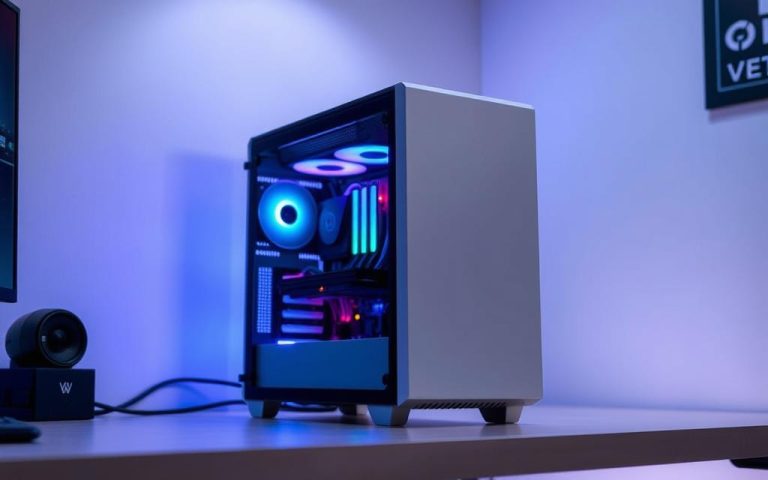
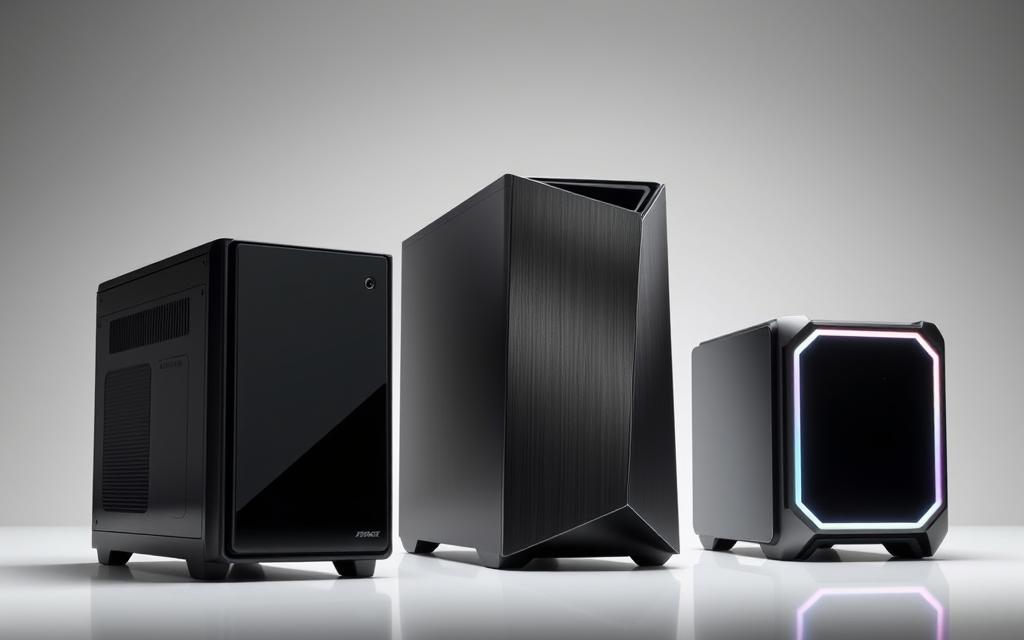
Mini PCs for gaming are small, like modern routers or hard drives. They’re easy to place on a desk or carry in a bag. This size is a big change from big gaming computers.
The design of these PCs is sleek and simple. They look good and use space well. These tiny towers have all the ports you need but take up less space than big PCs.
Performance Metrics
These small PCs are powerful for their size. They use top-notch processors and graphics cards. They can match the performance of bigger desktops.
What makes them tick? Here are the key points:
- Fast processors that don’t get too hot
- Graphics cards with lots of VRAM
- Quick SSD storage and lots of RAM for smooth games
- Cooling systems that keep them running well
The mini pc specifications often surprise people. They can handle 1080p and 1440p games well. Some even play 4K games in less demanding games.
Compared to big desktops, mini PCs are more efficient. They get similar game performance but use less power and make less noise. This is a big achievement for their small size.
Evolution of Compact Gaming Systems
The journey of compact gaming systems is truly fascinating. It shows how mini pcs have grown from simple beginnings to today’s powerful units. These systems have changed what gamers expect from small computers.
Historical Context
The history of compact gaming started in the 2000s with early miniaturisation attempts. At first, these systems focused on being small, but often lost out on gaming power. They had integrated graphics and lower-power processors that couldn’t handle tough games.
By the mid-2010s, makers saw the chance for compact gaming systems. They began using custom cooling and special motherboards for more powerful parts. This was the first real effort to make small systems good for gaming.
The big change came when Intel and AMD made chips that were powerful but didn’t use a lot of power. As one expert said,
“The emergence of efficient, high-performance chips fundamentally changed what was possible in small form factors.”
Technological Advancements
Recent gaming pc advancements have sped up the growth of mini systems. Modern GPUs for small cases are a big leap forward. They match the power of bigger GPUs but use less power.
Cooling tech has also improved a lot. New heat pipe systems, vapour chamber cooling, and custom liquid cooling help these small systems stay cool. Makers have come up with smart ways to manage heat that were unthinkable a few years ago.
Storage tech has also improved, with NVMe SSDs being super fast in small sizes. Memory tech has also advanced, allowing for more and faster memory in small spaces. These gaming pc advancements have made today’s mini PCs as good as big gaming rigs.
These new technologies have changed compact gaming systems a lot. Today, they can match the power of many full-sized computers. This marks a big change in the evolution of mini pcs and their role in gaming.
Benefits of Opting for a Mini Gaming PC
Traditional gaming towers are common, but mini systems offer unique advantages. They pack impressive power in a small package. This is great for those with limited space or specific lifestyle needs.
Space Efficiency
Mini gaming PCs are incredibly space-efficient. They take up less than a quarter of the space of traditional towers. This makes them perfect for small spaces, dorms, or minimalist offices.
These systems help keep your space tidy while providing full computing power. They allow for better organisation and more flexible room layouts. If you’re interested, check out the pros and cons of mini PCs to see if they’re right for you.
These designs are great for places with multiple uses. They fit well into home entertainment areas, small offices, or creative spaces without taking over.
Portability and Flexibility
Mini gaming PCs are super portable. They weigh between 2-5 pounds and are small enough to carry in a backpack or luggage. This makes gaming a mobile activity.
This idea changes how and where we game. Students can easily move their systems between home and school. Travelers can keep gaming without hassle. Even those who go to LAN parties find it easier to carry their gear.
These systems are also versatile. They can be mounted on monitors or under desks. This lets users create their own gaming stations that use space well.
Aesthetic Appeal
Modern mini gaming PCs are stylish. They combine good looks with great performance. Their sleek designs fit well with modern interiors.
Many have customisable RGB lighting. This lets users match the lighting to their room or personal style. The designs are clean and simple, unlike the usual gaming rig look.
These PCs use high-quality materials like aluminium and glass. The focus on detail shows in their engineering. They’re not just computers, but also stylish pieces.
Mini PCs offer more than just specs. They represent a smarter, more adaptable way to compute. They meet both performance needs and space constraints.
Core Components in a Gamer PC Mini
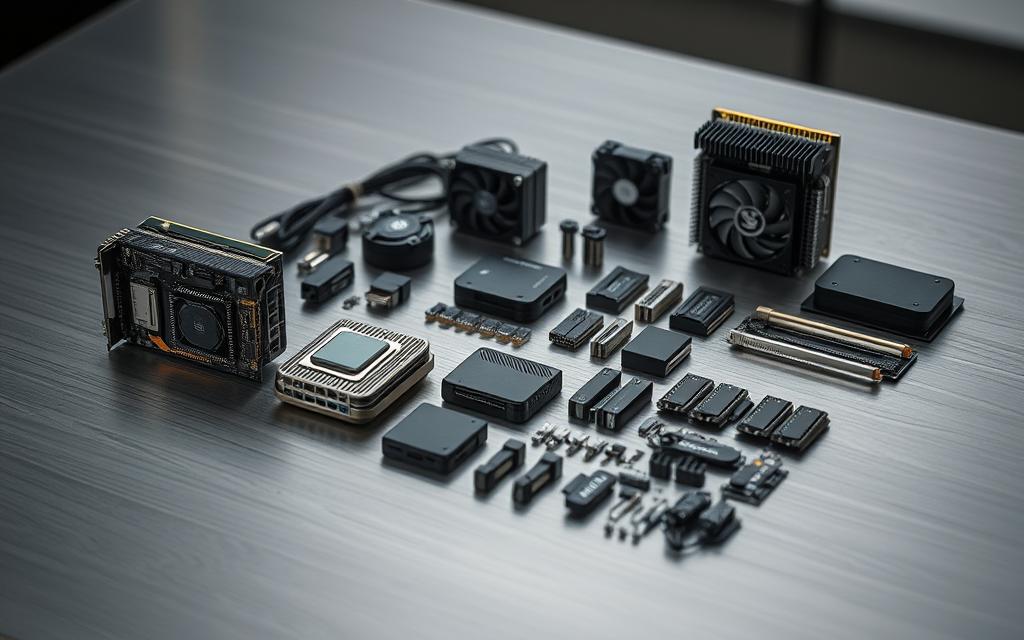
Creating a powerful gaming PC in a small size needs careful part picking. The right mix of processors, graphics, and storage is key. It decides if your mini gaming PC runs smoothly or if it lags.
Processor Choices
The central processing unit is the brain of your mini gaming PC. Modern systems use powerful mobile or low-power desktop processors. These balance performance with keeping cool.
Intel and AMD offer great choices for different gaming needs and budgets.
Intel vs AMD Options
Intel’s mobile processors, like the H-series chips, have strong single-core performance. This is good for many games. Intel’s Iris Xe graphics also offer decent gaming when you don’t have a separate graphics card.
AMD’s Ryzen mobile processors have strong multi-core performance. This is great for streaming and gaming at the same time. AMD’s Radeon graphics often beat Intel’s integrated graphics.
| Feature | Intel Processors | AMD Processors |
|---|---|---|
| Single-Core Performance | Excellent for most games | Very good, improving steadily |
| Integrated Graphics | Iris Xe (capable) | Radeon Graphics (stronger) |
| Multi-Core Efficiency | Good for gaming | Excellent for streaming+ gaming |
| Thermal Management | Advanced cooling solutions | Precision Boost technology |
Graphics Capabilities
Graphics processing is key for your gaming visuals and frame rates. Mini gaming PCs use either integrated graphics or dedicated graphics cards.
Integrated vs Discrete GPUs
Integrated graphics have gotten much better. They can handle esports and less demanding games well. They’re the most space and power efficient choice.
Discrete GPUs from NVIDIA and AMD offer more power. Models like NVIDIA’s mobile RTX series or AMD’s mobile Radeon chips enable high-quality gaming. They’re the top choice for serious gamers.
Choosing between integrated and discrete graphics depends on your gaming goals and budget. Casual gamers might be happy with integrated graphics. But serious gamers need discrete graphics for the best performance.
Storage and Memory
Fast storage and enough memory are essential for any gaming system. NVMe SSDs are the standard for gaming pc hardware because of their speed and small size. They make games load faster and the system more responsive.
Memory is also important. Most mini gaming PCs have 16GB to 32GB of DDR4 or DDR5 RAM. Using dual-channel memory gives the best gaming performance.
When picking storage, think about your main NVMe drive for games and the OS. You might also want a second drive for extra files. Many mini systems support extra 2.5-inch drives or second M.2 slots.
Knowing about these processor and gpu options helps you pick the right mini gaming PC. The right mix ensures your system gives you the gaming experience you want.
Notable Gamer PC Mini Models
Several brands are leading the way in compact gaming systems. They have mastered the art of combining high performance with small sizes.
Intel NUC Series
Intel’s NUC series is among the top best mini gaming pcs. They show great engineering, mixing power with small size.
The newest NUC gaming models have strong Intel processors and dedicated graphics. They also have the latest connectivity and can be upgraded easily.
For reliable Intel NUC gaming, these PCs offer smooth play in popular games. Their quality and cooling make them perfect for those with limited space.
ASUS ROG Compact Systems
ASUS brings its gaming expertise to the mini PC world with great results. Their ASUS ROG mini systems have cool designs and top-notch hardware.
These PCs often have special cooling and high-quality parts. They keep the ROG brand’s promise of performance in a small space.
They also focus on RGB lighting and design. This makes them stand out, even though they’re small.
Zotac Magnus Series
Zotac’s Magnus series shows what small PCs can do. They pack desktop-class graphics into tiny cases.
Their design ensures great cooling. This means they stay stable during long gaming sessions.
Zotac proves that size doesn’t limit gaming power. Their PCs are among the most powerful in the mini PC world.
Choosing the right parts is key when building a gaming PC. Start with the best motherboards for an ultimate PC gaming experience, even in small sizes.
Challenges and Considerations
Mini gaming PCs have many benefits, but buyers need to think carefully before buying. These small systems face unique challenges compared to regular gaming desktops.
Thermal Management
Heat is a big problem in small PCs. They don’t have much room for air to move, making it hard to cool down.
Companies use special cooling methods to help. These include vapour chambers, liquid cooling, and special fans. But, they can’t always keep the PC cool during long gaming sessions.
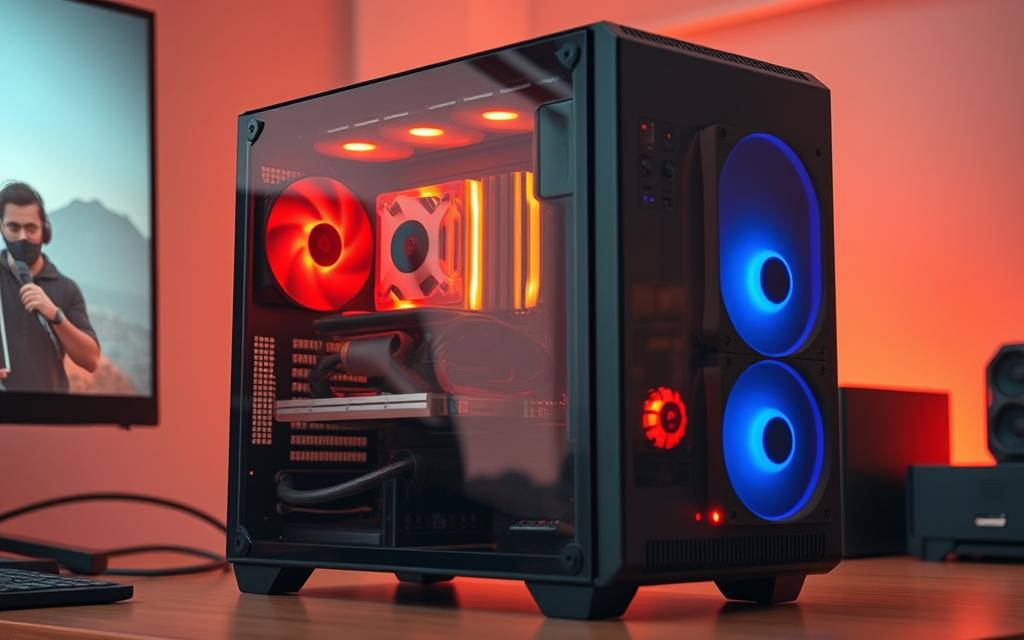
It’s important to keep mini PCs in well-ventilated places. You might need extra cooling tools. Cleaning them regularly helps keep them cool.
Upgrade Limitations
Upgrading mini PCs is tricky. They are designed to be compact, making it hard to add new parts.
These PCs use special boards and parts that can’t be easily swapped out. Graphics cards are often custom or soldered in. This makes them efficient but hard to upgrade later.
Upgrading memory and storage is a bit easier, but space limits what you can add. Think about your future needs before buying a mini PC. Upgrading it fully might be hard.
Cost vs Performance
High-end mini PCs are pricey. You need to think if they’re worth it. They cost more because of their special design and parts.
It’s important to look at how much you get for your money. Mini PCs are powerful, but they cost more than regular PCs. This is because of the extra work and parts needed for their small size.
If you’re watching your budget, consider mid-range models. They offer good value with their performance. It’s all about what you value most: space, portability, or power.
Even with these challenges, mini PCs are getting better. Companies are working to improve cooling and upgrade options. They aim to make these PCs more affordable for gamers.
Future Trends in Compact Gaming PCs
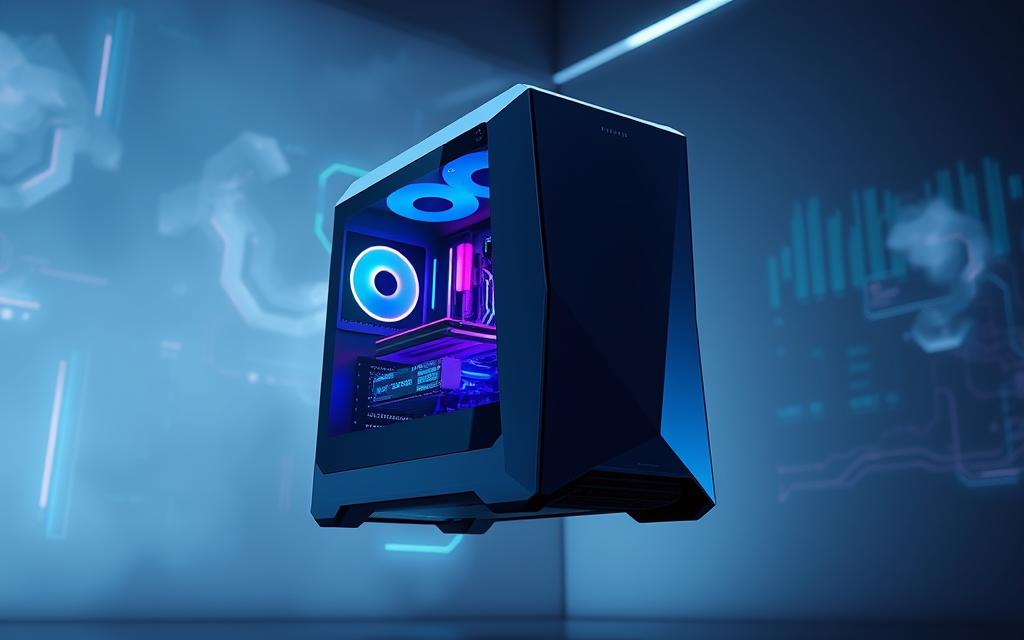
The world of compact gaming PCs is set for big changes soon. New tech and changing market needs are leading to exciting updates. These updates will make mini gaming PCs more powerful, efficient, and flexible than ever.
Emerging Technologies
Artificial intelligence is a big emerging gaming technology for small systems. AI will help manage heat, adjust performance, and save power. It will change settings based on what you’re playing and the environment.
Cloud gaming will get better in mini PCs too. These systems will mix local and cloud power for amazing graphics without huge hardware. It’s a win-win for gamers.
Processors are getting smarter and more efficient. ARM chips are leading the way with great performance and less power use. They help keep things cool and save energy while gaming.
Graphics will get a big boost from new cooling and GPU designs. Next-gen cooling will let small PCs handle more without overheating. This is a big step for small gaming systems.
Support for VR and AR will become common in top mini PCs. Better connections and power will make these systems great for immersive games. It’s a big leap for the future of mini pcs in gaming.
| Technology | Expected Impact | Timeframe | Key Benefits |
|---|---|---|---|
| AI Integration | High | 2024-2025 | Smart optimisation, better thermals |
| Cloud Gaming | Medium-High | 2025-2026 | Reduced hardware demands, flexibility |
| ARM Processors | Medium | 2024-2027 | Power efficiency, cooler operation |
| Advanced Cooling | High | 2024-2025 | Higher sustained performance |
| VR/AR Support | Medium | 2025-2026 | Immersive experiences, broader compatibility |
Market Predictions
The market for small gaming PCs is set to grow fast over the next five years. Analysts say it will grow by 15-20% each year. This is because more people live in cities and have less space.
New companies will join the market, bringing new ideas and prices. Big brands will keep improving, and startups will shake things up. This competition will lead to better products and lower prices for everyone.
Being eco-friendly will become a key selling point. Makers are focusing on saving energy, using recyclable materials, and cutting down on waste. This meets the growing demand for green products and is a big gaming pc trend.
Prices will drop as tech gets better and parts become more efficient. Soon, you’ll find affordable, high-performance PCs that are small. This will make top gaming experiences available to more people.
Modular designs might become popular, letting you upgrade parts without replacing the whole system. This could make small PCs last longer while keeping them compact. It’s a smart move for the future of mini gaming PCs.
Mini PCs might also become smart home hubs, controlling other devices while gaming. This is an exciting direction, combining gaming with smart home tech. It shows how tech is coming together in new ways.
Conclusion
The mini gaming pc has changed what gamers want from small systems. Now, these PCs can match the power of big towers. For example, the Wired2Fire HAL 9000 has a Ryzen 7 9700X and RTX 5070 Ti.
This shows a big change. You don’t have to give up power for a small size. Today’s mini PCs have great cooling, top-notch parts, and look amazing, all in a small package.
The future of gaming PCs looks bright. They will get even smaller but not lose power. New tech will make them more powerful in less space. Upgrades, as shown in PC guides, will help them reach their full strength.
In short, mini gaming PCs are real gaming machines. They are perfect for those who want power without the bulk. They offer both portability and strong performance.
FAQ
What is a gamer PC mini?
A gamer PC mini is a small, powerful computer for gaming. It has advanced processors and GPUs in a tiny package. This means you get great gaming performance without taking up much space.
How does a gamer PC mini compare to a traditional gaming desktop?
Gamer PC minis are more portable and space-saving than traditional gaming desktops. They offer similar gaming performance but in a smaller size. They also look sleek and modern.
Can a gamer PC mini run demanding games like Cyberpunk 2077?
Yes, many gamer PC minis can handle demanding games like Cyberpunk 2077. They have strong GPUs and processors. But, they need to meet certain hardware requirements.
What are the main benefits of choosing a mini gaming PC?
Mini gaming PCs save space, are easy to carry, and look great. They’re perfect for small desks, travel, or minimalist setups. They also come with stylish designs and customisable lighting.
Are gamer PC minis suitable for students or professionals?
Absolutely. They’re great for students in dorms or professionals on the move. Their small size and portability make them ideal for work and play anywhere.
What processor options are available in gamer PC minis?
Gamer PC minis use processors from Intel and AMD. They offer different performance levels. You can find Intel Core i7 and AMD Ryzen series processors, designed for power and efficiency in small sizes.
Do gamer PC minis use integrated or discrete graphics?
High-end gamer PC minis have discrete GPUs from NVIDIA or AMD for better gaming. But, some budget or ultra-compact models use integrated graphics for less demanding games.
How is thermal management handled in such compact systems?
Manufacturers use special cooling solutions to manage heat in small spaces. They use heat pipes, vapour chambers, and efficient fans. This keeps the system cool and performing well.
Can I upgrade components in a gamer PC mini?
Upgrades are limited in gamer PC minis due to their size. Some models let you upgrade RAM or storage, but GPU and CPU changes are rare. Always check the model’s specifications.
What are some notable gamer PC mini models available?
Notable models include the Intel NUC series for versatility, ASUS ROG for gaming and style, and Zotac Magnus for powerful hardware in a small package.
Are gamer PC minis more expensive than traditional gaming PCs?
Yes, they can be more expensive due to advanced engineering and materials. But, prices vary, and many offer great value for their performance, portability, and design.
What future advancements can we expect in compact gaming PCs?
Future advancements include AI optimisation, more efficient GPUs, and better VR and cloud gaming integration. We might also see ARM processors and more eco-friendly designs.
How do I choose the right gamer PC mini for my needs?
Think about what you need—gaming, portability, or space saving. Look at processor performance, graphics, upgrade options, and budget. Researching models and reading reviews can help you decide.